QUICK START
The essentials at a glance
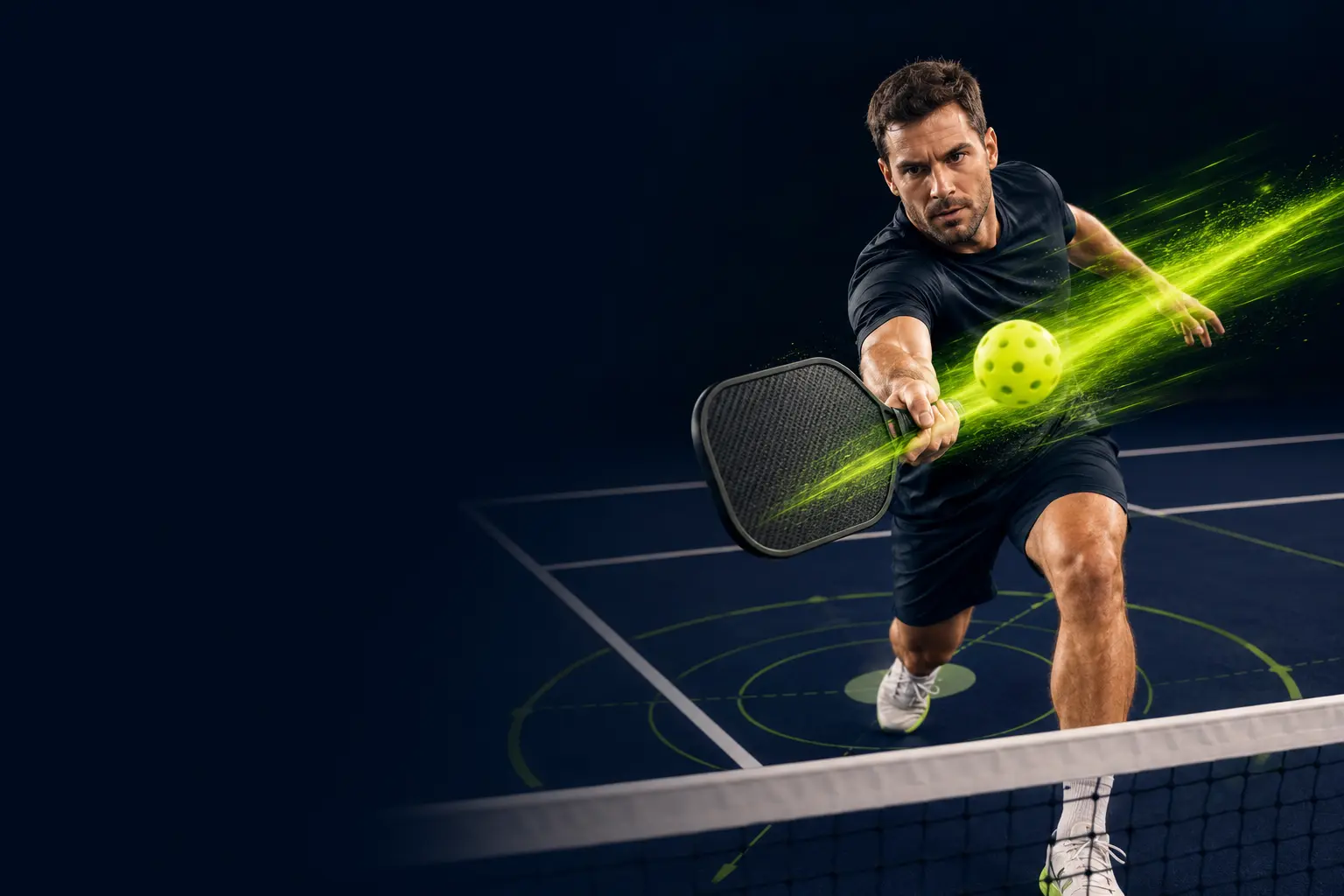
- Keep the paddle in front and slightly backhand-ready.
- Use a short punch instead of a backswing.
- Target the seam, paddle-side hip, or inside foot.
- Stay low and move from the legs.
- Recover to center before looking for the finish.
Why the middle works
The seam can create indecision, particularly when both players could reach the ball. It also takes away sharp angles and gives your team more margin.
Choose a specific middle target rather than hitting vaguely between opponents.
Build a compact counter
Start with the paddle in front, absorb with a stable wrist, and redirect using a short movement from the shoulder. Long swings are late in hand battles.
Contact in front and keep the finish small enough to recover immediately.
Move, strike, recover
Use a lateral step or small shuffle so the ball stays inside your frame. Avoid reaching while your weight falls away.
After contact, return the paddle to center and close the middle with your partner.
Decide whether to block, counter, or let the ball go
Counter when contact is in front, your base is stable, and the ball gives you a usable path across the net. Block or reset when you are stretched or the ball arrives low. A counter adds purposeful redirection; a reset removes pace so your team can recover. Forcing the first choice on a defensive ball often sends it into the net or long.
Some speed-ups will travel out if you let them pass. Work on that read with moderate feeds and enough space, rather than trying to dodge maximum pace immediately. Contact height, direction, spin, and speed all matter. If you are unsure, stay ready for a compact response instead of making a large last-second swing.
The middle is a moving target
When opponents stand close together with paddles ready, a vague ball between them may be easy for either player. Choose a specific lane: the gap created by a lateral step, an inside foot, or a hip that makes the receiver adjust. If a prepared player is waiting in that lane, another neutral reset may be the better choice.
Avoid turning middle-ball advice into a rigid forehand rule for your own team. Establish who takes a fast seam ball based on handedness, reach, and who can contact in front. Make an early call where time allows. Do not swing across your partner's body just because a slogan says the forehand always owns the middle.
Fix the first late counter before increasing speed
A counter that consistently arrives late often starts with the paddle too low or too far to the forehand side. Return to a comfortable central ready position after each shot and reduce your takeback. If the paddle is ready but your balance falls away, slow the drill and use a small lateral adjustment before contact.
Ask a partner for ten predictable feeds at a pace both players can control. Aim through a broad middle lane and recover after every contact. Then alternate two feed locations. Add random pace only after the compact response stays repeatable. Track target hits and balanced recoveries separately so speed does not hide a technique problem.
THE TAKEAWAY
Win the middle with early preparation, compact contact, and immediate recovery. Make opponents solve the seam while your team stays connected.
TAKE IT TO THE COURT
9 minutes practice session
Land 8 of 10 compact counters through a safe middle lane.
- 010–3
Paddle-only blocks
Partner volleys at moderate pace. Redirect through the middle with no backswing.
Success looks like: Contact stays in front and the paddle returns to ready. - 023–6
Hip and seam
Alternate targets between inside hip and team seam.
Success looks like: Eight of ten balls pass through the selected lane. - 036–9
Live counter
Begin with cooperative volleys; either player may speed up after three balls.
Success looks like: You counter compactly and stay balanced for the next exchange.
READER QUESTIONS
Frequently asked questions
Should I use forehand or backhand in the middle?
Use the paddle position that gives the earliest balanced contact. At the kitchen, a compact backhand-ready position often protects the body and seam efficiently.
Where exactly is the middle target?
Aim at the space between players, an inside hip, or the dominant-side player's backhand shoulder depending on their spacing.
Helpful official resources
Rules and terminology can change. These current USA Pickleball resources provide additional official guidance.
Equipment for this practice
Use a comfortable paddle, a consistent ball model, and safe targets. Keep the same equipment while you work on the cue so you can judge the change in technique. Our pickleball gear buying guide explains paddle fit, indoor and outdoor balls, court shoes, and what to check before buying.
WHY YOU CAN USE THIS
How this guide was built
This guide turns official rules, established terminology, and common on-court situations into practical decisions and measurable practice. It is reviewed when governing guidance or a material recommendation changes.
Read our research, sourcing, and correction standards